|
|
Protocol changes ensue for EMS providers treating cardiac arrest patients |
| By Chief Eddie Ruch Jr | |
| June 30, 2013 | |
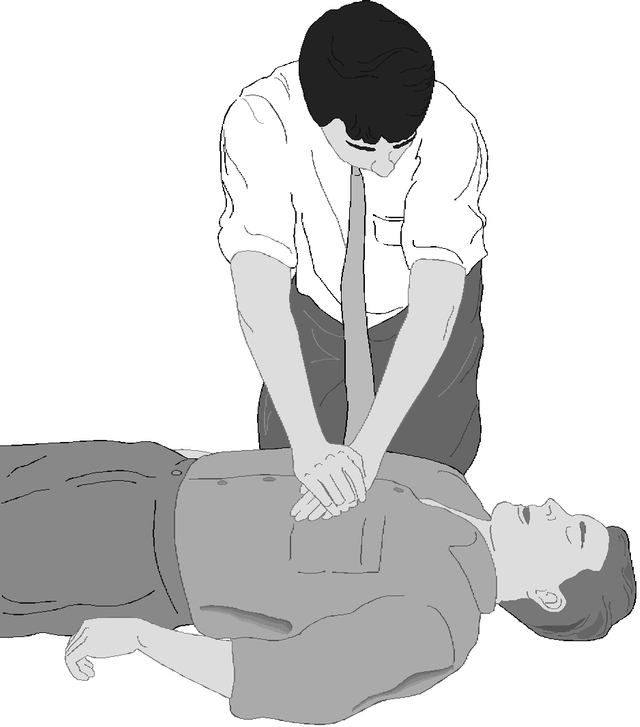
If 15 minutes of CPR hasn't worked, if the cause is futile, an emergency medical services provider can now stop resuscitating a patient suffering a medical cardiac arrest without a medical consult. Beforehand, in order to stop attempting to resuscitate the individual, the EMS provider had to call a physician on the radio, according to Michael G. Millin, an assistant medical director for Maryland Institute for Emergency Medical Services Systems. Then, the patient would be transported to the hospital via ambulance for a medical physician to pronounce the individual dead, according to Robert Bass, the Maryland Institute for Emergency Medical Services Systems' executive director. It's a safety issue, Bass said, as now ambulances, lights flashing, won't need to be on the road unnecessarily, as EMS personnel can now pronounce the person dead. "Really, it's dangerous for the providers and the public to load that kind of patient," he said. And there's another reason, said Millin, who also serves as medical director for Johns Hopkins critical care transport program and has co-authored the position statement for the National Association of EMS Physicians on the protocol for medical cardiac arrest. "It's also about saving lives," he said, "and it helps focus the efforts of the EMS providers where it should be — on good quality CPR and chest compressions." The changes are based on recommendations from the National Association of Emergency Medical Services Physicians, the American College of Surgeons Committee on Trauma and others. Every year, the Maryland Institute for Emergency Medical Services Systems makes changes to its protocols that all counties are required to implement, effective July 1. This applies to a medical cardiac arrest, according to Bass, symptoms which include loss of consciousness and lack of a heartbeat or a pulse. When the emergency medical services provider responds on scene, they'll administer CPR and use a defibrillator on the patient for about 15 minutes. This is not new, as loading a patient into the ambulance wastes precious time, not to mention it's impossible to do good CPR in a moving ambulance, Bass said. "The longer you wait to get that pulse restored," he said, "the less likely the patient is to be resuscitated." If the patient is revived, they'll be driven the hospital, according to Bass. But after 15 minutes of resuscitation efforts have ensued with no such luck, the outlook is grim, Bass said. "If you don't get them back from that," he said, "you're not going to get them back." They're allowed to stop resuscitation efforts without taking the individual to the hospital if three criteria are met, according to the Maryland Medical Protocols for Emergency Medical Services Providers booklet effective July 1. 1) The provider did not witness the cardiac arrest, and the patient is unresponsive, pulse-less and has stopped breathing. 2) There's a flat line on the monitor, meaning there's no shockable rhythm identified by a defibrillator. 3) The person's pulse has not returned. This doesn't apply to patients who are pregnant, under 18 years old or are likely suffering from hypothermia, according to the protocol. For a cardiac arrest caused by trauma — such as from a fall or a gunshot wound — the line must be flat on the monitor and there must be no signs of life in order to stop resuscitation without a medical consult, according to the protocol. This new protocol aligns with the National Association of EMS Physicians and the American College of Surgeons Committee on Trauma joint position that states providers should have guidelines allowing EMS personnel to terminate resuscitation during traumatic cardiac arrest. It states that 15 minutes of CPR should be provided first but notes that "the science in this regard remains unclear." The same is stated in the National Association of EMS Physicians' position on medical cardiac arrest because "such protocols have the potential to decrease unnecessary use of warning lights and sirens and save valuable public health resources." The new change will take some getting used to, said Curtis Wiggins, Carroll County Volunteer Emergency Services Association's EMS training coordinator. But the Carroll providers have completed the state-mandated training online — and passed the quizzes — on the new protocol. But hardest part is going to be changing the public's perception, he said. "When they see the crews arrive on the scene and aggressively work for about 15 minutes and then decide this is a non-salvageable patient, that's probably our biggest hurdle in making sure the public understands," he said. ***Story Provided By the Carroll County Times*** |
|
|
|